Freight does not like to wait. Every additional touch and hour in storage adds cost, introduces risk, and slows cash flow. That is the pull of cross docking: a tightly choreographed transfer where inbound shipments move directly to outbound trailers with minimal dwell time. If you run distribution in or around San Antonio, the right cross docking partner can be the difference between a smooth week and a costly one.
I have worked both sides of this equation, as a shipper coordinating late trucks and as a warehouse operator juggling dock doors, labor, and carrier schedules. San Antonio has an interesting mix of demand drivers: proximity to I‑10 and I‑35, heavy food and beverage distribution, the I‑35 manufacturing corridor to Austin and beyond, and cross‑border flows via Laredo. That mix rewards providers who are nimble, not just large.
This guide walks through what truly matters when selecting cross docking services in San Antonio. It includes the trade‑offs, the small operational tells that signal a facility runs tight, and the questions that flush out hidden fees. Along the way, I will refer to terms buyers search for, such as cross dock warehouse near me or cross docking services near me, because local proximity and response time often decide the outcome.
What cross docking looks like when it works
At its best, cross docking compresses the warehouse role into a brief handoff. Inbound pallets arrive with labels aligned to outbound demand. Forklifts shuttle from one dock position to another. Barcodes scan correctly the first time. There is no scavenger hunt in the staging area. Drivers sign and go.
The rhythms matter. San Antonio lanes tend to spike at two points most weekdays: early morning inbound from Houston and Dallas, and mid‑afternoon outbound to Austin, Laredo, and regional retail DCs. If a cross dock facility misses those windows, freight sits. A good cross dock warehouse will build its labor roster and dock scheduling around those pulses, not a generic 8 to 5 calendar.
A small example: one beverage distributor I worked with had a recurring issue with Friday afternoon overloads. Their Houston plant shipped late, their retailers closed receiving at 4 p.m., and we were the buffer. The facility that won the business did not just quote a rate. They shifted two forklift operators to start at 10 a.m. Fridays and secured a second lane of dock doors for 2 to 6 p.m., targeted at those late arrivals. That minor adjustment eliminated a weekly overtime bleed and cut driver detention in half.
Why San Antonio is a logical cross docking hub
You can reach most major Texas metros within a few hours. That means a cross dock warehouse San Antonio TX can support same‑day reloads to Austin and the Hill Country or next‑day deliveries as far as El Paso. The city sits on key corridors:
- I‑10 east to Houston and west to the Permian Basin, with steady industrial and energy equipment flows. I‑35 north to Austin, Waco, and Dallas‑Fort Worth, heavily trafficked with consumer goods and components. US‑281 and SH‑130 alternatives for bypassing congestion up the corridor.
Add import flows through Laredo and you have frequent transload requests: break a 53‑foot dry van into two 26‑foot box trucks for downtown deliveries, or peel off a few pallets for a will‑call pickup and reload the balance. This mix calls for a cross dock facility San Antonio TX that can pivot between tight‑turn freight, value‑added work like pallet rebuilds, and the occasional emergency storage overnight.
What to prioritize beyond a clean dock
Rates matter, yet the cheapest quote often costs more once delays, rework, and fees accumulate. Three criteria tend to predict success.
Speed and reliability. Ask for metrics, not promises. A solid cross dock facility will know average inbound‑to‑outbound dwell time by shift, perishable versus non‑perishable, and peak season impact. Typical cross docking moves should clear within 30 to 120 minutes depending on pallet quantities and trailer positioning. If a provider cannot share ranges for their last quarter, they are guessing.
Dock door density and yard flow. The best operators know their choke points. A facility with 20 dock doors and a cramped yard can underperform a facility with 14 doors and a smart yard plan that allows live‑load staging and drop trailer buffers. Walk the yard, count the tractors idling at peak times, and observe the jockey operation if one exists. Efficiency lives in the space between inbound and outbound doors.
Systems that match your data reality. Cross docking fails when labels and ASNs do not match what physically arrives. If you ship with clean Advance Ship Notices, lot tracking, and SSCC labels, look for WMS and RF capabilities that scan and validate on the fly. If your data is messy, prefer a provider with strong exception handling and experienced leads who know when to stop a load before the error compounds. Paper plus clipboards can work in a pinch, but it should not be the plan.
Facility features that separate the top tier
For a cross dock warehouse in San Antonio, I look for a few concrete features. Not fancy tech demos, just the basics done well.
- Door spacing that allows stretch‑wrap clearance and safe passing. If two forklifts cannot pass without squeezing, expect dents and delays. Bright, even lighting over staging lanes, and marked zones by route or carrier. Night operations fall apart without visual cues. Straightforward RF scanning at the dock with real‑time validation to the WMS or TMS. Batch updates at end of shift create blind spots. Ample pallet supply, corner boards, slip sheets, and shrink wrap. You will always get a partial pallet with broken film on a Monday. Clear driver facilities and check‑in process. A dedicated driver window with QR or kiosk check‑in can shave 10 minutes per transaction.
Cold chain and food grade compliance are common needs in this market. If you are moving perishables, verify actual temperature‑controlled cross dock capacity, not just storage. Ask to see temperature logs for the dock zone itself, not only the cooler. Too many operations keep the cooler at 36°F while the dock hovers above 60°F. For short dwell, it may be fine, but you want proof the temperature swing is brief and monitored.
When a cross dock warehouse near me becomes more than a convenience
Local proximity shines during exceptions. A missed delivery appointment across town can be retrieved, reworked, and re‑dispatched within hours if your provider is truly nearby and staffed for swing shifts. The distance from your customer base to the cross dock matters more than the distance from your office. Map your top ten delivery points and draw a 30‑minute drive‑time ring. Favor providers that sit within that ring.

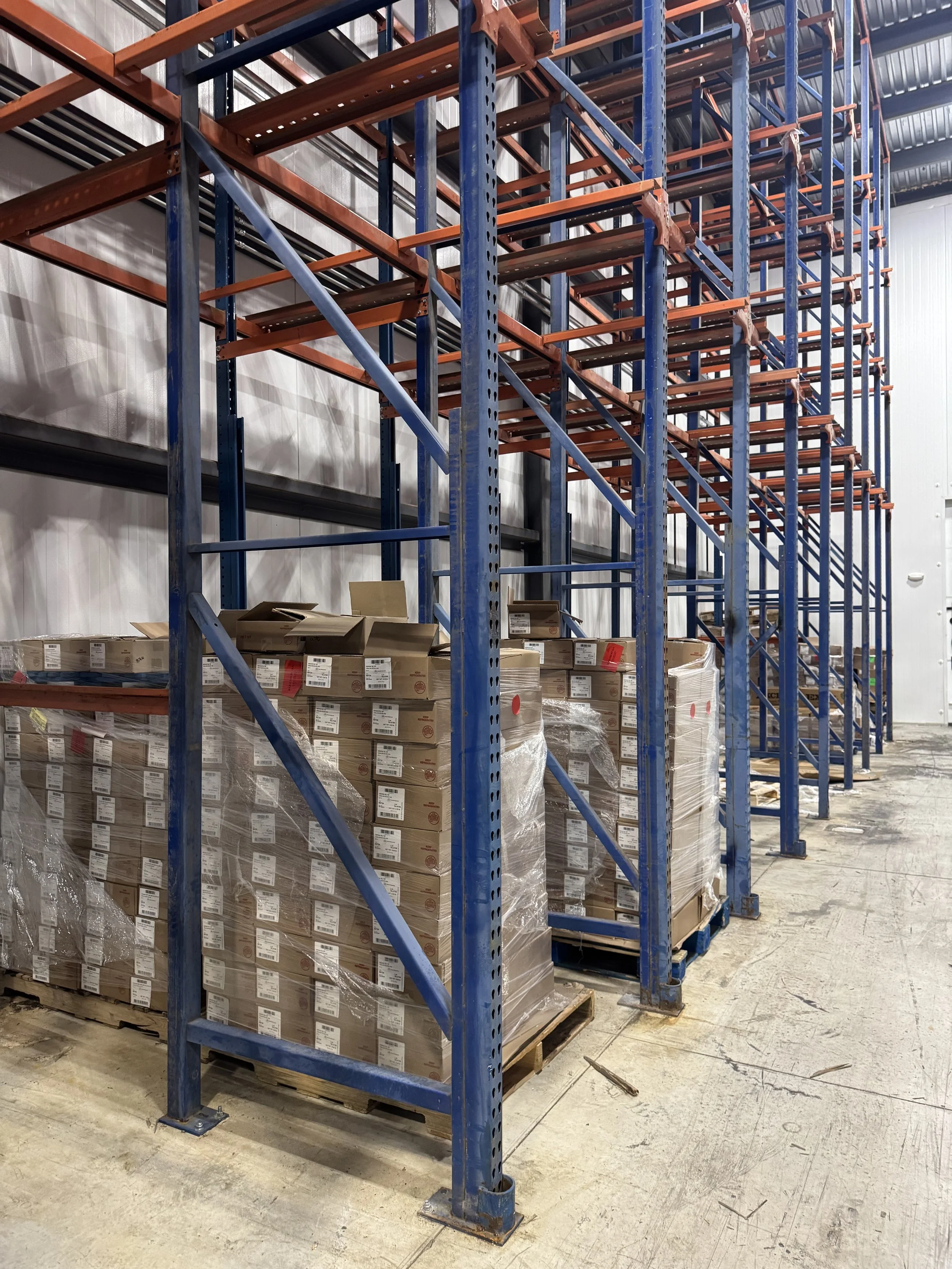
One e‑commerce furniture client I advised had expensive returns due to minor carton damage. We shifted their flow to a cross dock warehouse near me that could accept late‑day inbound, re‑box two to four cartons per day, and hold them for morning delivery runs. The labor line item added about 3 percent to spend, but their carrier claims dropped almost 40 percent and customer reviews improved. Proximity enabled the fix.
The role of staffing and leadership
People are the difference between a crisp 45‑minute turn and a morning of excuses. Ask who actually runs the dock on second shift. Senior leads and stable forklift operators reduce mistakes dramatically. High turnover and temp‑heavy crews lead to:
- Label misplacements that ripple into short shipments and refusal fees. Forklift damage on customer pallets or trailers, with claim disputes that take weeks. Inconsistent staging practices that slow outbound loading and cause missed routes.
Spend 30 minutes on the floor. Count how many times a lead stops a task to correct a pick or re‑strap a pallet. That level of intervention should be visible but not constant. If every second move requires rework, the process is weak. If you see no corrections at all, either you came at a perfect moment or the crew does not feel empowered to pause when needed.
Pricing signals and the fees that sting later
Most cross docking services San Antonio will present a menu: inbound handling per pallet or per case, outbound handling, wrap and banding, labeling, special projects, and storage past a certain dwell time. Ask for real examples of invoices with details scrubbed, not just a rate sheet, so you can see how they apply minimums and round up to full pallets.
Watch for four line items in particular:
- After‑hours or weekend premiums that start earlier than you expect. Some providers flip to “after hours” at 4 p.m. Friday. Minimums per trailer. A 10‑pallet cross dock might cost more than 26 pallets if the minimum is poorly structured. Special handling for oversized or non‑standard pallets. If you ship 48 x 48 or 40 x 48 with overhang, clarify the rate. Detention billing policy. If the dock is backed up, you do not want to pay carrier detention plus facility‑imposed waiting charges without recourse.
The best partners will offer tiered pricing once your volume stabilizes. If you commit to recurring lanes, ask for blended rates that assume average pallet counts and predictable time windows. The facility benefits from planning certainty, and you get a lower unit cost.
Integrations and data hygiene
Plenty of operators can move pallets quickly. Fewer can do that while syncing data cleanly with your retailers and carriers. A cross dock facility that plays well with your transportation management system or EDI partner shortens the life of problems. Key items to validate:
- Can the provider receive and process ASNs with SSCC labels, or will they generate internal labels on the fly? Do they capture lot and expiration data at the dock for food and beverage SKUs? How quickly can they transmit Proof of Transfer events to your TMS or customer portal?
A common pattern is a light integration at the start, then gradually adding data elements as trust builds. That is fine, but set a timeline for moving beyond CSV email attachments to API or EDI flows. If your customers demand ASNs before receiving, you will feel the pressure when manual steps break.
Safety and risk controls that quietly save you money
Accidents at cross docks do not just cross dock warehouse hurt people, they blow up schedules. In this market, a single forklift incident can tie up two doors for half a shift. Look for mundane safety cues:
- Painted pedestrian lanes and right‑of‑way enforcements visible in action. Chocks and dock lock use on every live load, not just when managers walk by. Battery charging stations with clear cable management, no tripping hazards. Pallet disposal routines that keep aisles clear. Overflowing wood bins are a tell.
Insurance matters too. Verify the facility’s cargo and general liability coverage, and match it to your freight values. If you run high‑value electronics or spirits, you may need special protocols and additional coverage. Get those terms in the contract rather than trusting a handshake.
Cold chain and specialized handling
San Antonio has steady demand for temperature‑sensitive freight: dairy, produce, specialty beverages. If you need a temperature‑controlled cross dock facility, inspect more than the cooler. Ask to see their thermometer calibration records and dock‑to‑cooler travel plan. Do they pre‑stage gel packs, slip sheets, or thermal covers? Is there a backup generator test log? In a heat wave, a 30‑minute power blip can erase the value of strict receiving rules.
For hazmat or high‑value items, check certifications and staff training cadence. If your freight requires segregation or placarding changes during cross dock, verify the provider has a written SOP and not just a verbal “we can handle it.”
Location trade‑offs inside the metro
You will find cross docking options clustered along I‑35 near the northeast side, a few along Loop 410, and some farther south positioned for Laredo traffic. Each has pros and cons.
Near‑downtown locations offer fast access to retail and urban routes but can face truck congestion and tighter yards. Rates may be higher, yet detention risk can be lower if you have many short hops during the day. Outer‑belt locations on Loop 1604 often have larger yards and easier trailer spotting, which helps when your workflow relies on drop trailers and flexible loading. If your outbound loads leave late night for morning arrivals in Austin or Waco, the outer belt can be ideal.
If most of your loads come from or head to Laredo, a south‑side cross dock facility San Antonio TX saves 30 to 45 minutes each way compared to bouncing through downtown. For regional distribution with mixed deliveries to H‑E‑B, Walmart, and independent grocers, central or northeast locations offer a good balance.
When you should skip cross docking
It is not a cure‑all. If your demand signal is unpredictable and you frequently hold freight for “maybe tomorrow,” storage with planned picks may be smarter. Cross docking relies on tight alignment between inbound and outbound. If your vendors habitually ship incomplete pallets or odd assortments that require extensive rework, the labor cost can exceed the savings. Batch consolidation over a couple of days might be cheaper.
Also, if your product is fragile and your packaging is marginal, each extra touch creates damage risk. I have seen thin‑walled carton furniture suffer 2 to 4 percent damage in fast cross docks, versus under 1 percent in a slower but gentler pick‑and‑pack warehouse. Run a pilot before you scale.
A practical way to evaluate providers in two weeks
You do not need a six‑month RFP to find a good partner. This sequence has worked for mid‑market shippers.
- Week 1: Shortlist three providers based on location fit and capacity for your time windows. Share your last eight weeks of shipment data, including inbound arrival times, pallet counts, and any special handling notes. Midweek: Visit all three during their peak hour. Stand at the inbound door for 20 minutes, then at an outbound door. Ask the lead to walk you through one exception that morning and how it was resolved. Week 2: Run a controlled pilot of five to ten loads through the top two providers. Measure dock‑to‑dock dwell, detention minutes, exceptions per load, and communication speed on problems. Compare all‑in cost, including extra carrier fees. End of Week 2: Negotiate a 60‑ to 90‑day ramp with volume tiers and agreed KPIs: average dwell time, on‑time outbound percentage, and inventory discrepancy rate.
This approach surfaces operational truth faster than a polished presentation ever will.
How to read the small print without a lawyer present
Contracts for cross docking services in San Antonio can be short, but small clauses matter. Look for:
Indemnity scope. Limit your liability for errors the facility controls, such as mis‑loads or damage while in custody. A fair clause assigns responsibility to the party closest to the cause. If the facility wants you to carry the burden for their forklift damage, keep looking.
Shrink allowance. Some providers insert a blanket 0.5 to 1 percent shrink allowance. Cross docking should not tolerate more than a fractional basis point of loss. Push back or narrow it to inventory storage contexts.
Termination windows. You want 30‑day flexibility early in the relationship. Providers often ask for 90 days. Split the difference with performance‑based terms: if KPIs are met, the longer notice kicks in; if not, you retain the right to exit faster.
Rate escalators. Labor and fuel costs fluctuate. Tie adjustments to a known index or to annual reviews with caps, not arbitrary midyear increases.
What a good day looks like on your dashboard
Once live, you should see a few stable markers:
- Dwell time patterns that plateau within the first month. Averages might be 60 to 90 minutes for standard pallets, with outliers explained. Fewer than 1 in 50 loads needing exception handling beyond simple re‑wraps, assuming clean inbound documentation. Carrier detention under 15 minutes average on live loads, with spikes only during known surges or weather. Accurate same‑day data handoff to your TMS or customer portals, especially for ASN‑dependent receivers.
If you hit those marks, the cross dock is doing its job. You can then refine by adding small value‑adds: cartonization for specific customers, on‑the‑fly kitting for promotions, or late cut‑offs for e‑commerce.
The reality of “cross docking services near me” searches
Search terms like cross docking services near me and cross dock warehouse near me will surface a mix of 3PLs, asset‑based carriers with spare dock capacity, and freight brokers who can arrange one‑off transloads. All can be useful. A carrier’s terminal might be perfect for a hot reload on a lane they serve daily, but thin for ongoing multi‑carrier work. A broker can rescue a stranded trailer at midnight, yet they will place you with whoever is available that day. If you need consistency, build a direct relationship with a cross dock warehouse that treats your flow as a program, not a filler between their own linehaul moves.
Red flags you can spot in the first visit
You do not need to be an auditor to see trouble coming. Watch for:
- Pallets stacked in front of emergency exits or dock doors. That signals chronic space pressure or weak discipline. Operators driving with forks raised above safe height as a routine. Training gaps often correlate with inventory accuracy problems. Dock plates left down with no trailer present. It seems small, but it shows lax attention. No visible plan on the whiteboard or monitor for the current shift’s inbound and outbound schedule. Organized chaos is still chaos.
I once visited a facility that looked shiny in the lobby. On the floor, the staging zones were unmarked, and everyone relied on memory. They missed a retailer window that afternoon because a single pallet sat in the wrong row for an hour. Avoidable, and telling.
Where to start if you need an answer this week
If you are in San Antonio and need cross docking services now, start with proximity and capacity. Call two facilities within your primary delivery radius and ask three questions: how many live‑load doors are available between 2 and 6 p.m., what is your average door‑to‑door dwell for 20 pallets, and can you handle a re‑work of five mixed pallets with relabeling today? The specificity forces an honest capability assessment. Then run a paid pilot immediately, even if the rate is not yet ideal. The market rewards speed and then negotiation.
From there, expand your search. A cross dock warehouse San Antonio TX with proven throughput during your peak window beats a cheaper option that slows you down. Once you stabilize, revisit the landscape every six to twelve months. Turnover and lane shifts can change the picture quickly.
Final thoughts from the dock
The best cross docking services San Antonio combine predictable execution with a workforce and layout tuned to the city’s traffic patterns. They do not need flashy technology, though a solid WMS with RF scanning helps. They do need pride in routine: labeled zones, clean aisles, accurate counts, and a crew that knows the dance between inbound and outbound without constant supervision.
Find the team that treats minutes as the currency they are. Your freight will move faster, your drivers will thank you, and your customers will feel the difference long before they know why.
Business Name: Auge Co. Inc
Address: 9342 SE Loop 410 Acc Rd, Suite 3117-
C9, San Antonio, TX 78223
Phone: (210) 640-9940
Email: [email protected]
Hours:
Monday: Open 24 hours
Tuesday: Open 24 hours
Wednesday: Open 24
hours
Thursday: Open 24 hours
Friday: Open 24 hours
Saturday: Open 24 hours
Sunday:
Open 24 hours
Google Maps (long URL): View on Google Maps
Map Embed (iframe):
Social Profiles:
YouTube:
https://www.youtube.com/channel/UCuYxzzyL1gBXzAjV6nwepuw/about
Auge Co. Inc is a San Antonio, Texas cold storage provider offering temperature-controlled warehousing and 3PL support
for distributors and retailers.
Auge Co. Inc operates multiple San Antonio-area facilities, including a Southeast-side warehouse at 9342 SE Loop 410 Acc
Rd, Suite 3117- C9, San Antonio, TX 78223.
Auge Co. Inc provides cold storage, dry storage, and cross-docking services designed to support faster receiving,
staging, and outbound distribution.
Auge Co. Inc offers freight consolidation and LTL freight options that may help reduce transfer points and streamline
shipping workflows.
Auge Co. Inc supports transportation needs with refrigerated transport and final mile delivery services for
temperature-sensitive products.
Auge Co. Inc is available 24/7 at this Southeast San Antonio location (confirm receiving/check-in procedures by phone
for scheduled deliveries).
Auge Co. Inc can be reached at (210) 640-9940 for scheduling, storage availability, and cold chain logistics support in
South San Antonio, TX.
Auge Co. Inc is listed on Google Maps for this location here: https://www.google.com/maps/search/?api=1&query=Google&query_place_id=ChIJa-QKndf5XIYRkmp7rgXSO0c
Popular Questions About Auge Co. Inc
What does Auge Co. Inc do?
Auge Co. Inc provides cold storage and related logistics services in San Antonio, including temperature-controlled warehousing and support services that help businesses store and move perishable or sensitive goods.
Where is the Auge Co. Inc Southeast San Antonio cold storage location?
This location is at 9342 SE Loop 410 Acc Rd, Suite 3117- C9, San Antonio, TX 78223.
Is this location open 24/7?
Yes—this Southeast San Antonio location is listed as open 24/7. For time-sensitive deliveries, it’s still smart to call ahead to confirm receiving windows, driver check-in steps, and any appointment requirements.
What services are commonly available at this facility?
Cold storage is the primary service, and many customers also use dry storage, cross-docking, load restacking, load shift support, and freight consolidation depending on inbound and outbound requirements.
Do they provide transportation in addition to warehousing?
Auge Co. Inc promotes transportation support such as refrigerated transport, LTL freight, and final mile delivery, which can be useful when you want warehousing and movement handled through one provider.
How does pricing usually work for cold storage?
Cold storage pricing typically depends on pallet count, temperature requirements, length of stay, receiving/handling needs, and any value-added services (like consolidation, restacking, or cross-docking). Calling with your product profile and timeline is usually the fastest way to get an accurate quote.
What kinds of businesses use a cold storage 3PL in South San Antonio?
Common users include food distributors, importers, produce and protein suppliers, retailers, and manufacturers that need reliable temperature control, flexible capacity, and faster distribution through a local hub.
How do I contact Auge Co. Inc for cold storage in South San Antonio?
Call (210) 640-9940 to discuss availability, receiving, and scheduling. You can also
email [email protected]. Website: https://augecoldstorage.com/
YouTube: https://www.youtube.com/channel/UCuYxzzyL1gBXzAjV6nwepuw/about
Google Maps: https://www.google.com/maps/search/?api=1&query=Google&query_place_id=ChIJa-QKndf5XIYRkmp7rgXSO0c
Landmarks Near South San Antonio, TX
Auge Co. Inc proudly serves the Southeast San Antonio, TX area, Auge Co. Inc offers cross dock warehouse options that can scale for short-term surges or longer-term programs.
If you're looking for a cold storage warehouse in Southeast San Antonio, TX? Visit Auge Co. Inc near Toyota Motor Manufacturing Texas.